Published on March 30, 2026 | Category: 英國生活百科
英格蘭2026推行「簡化回收」新規!廚餘與垃圾分類必睇懶人包
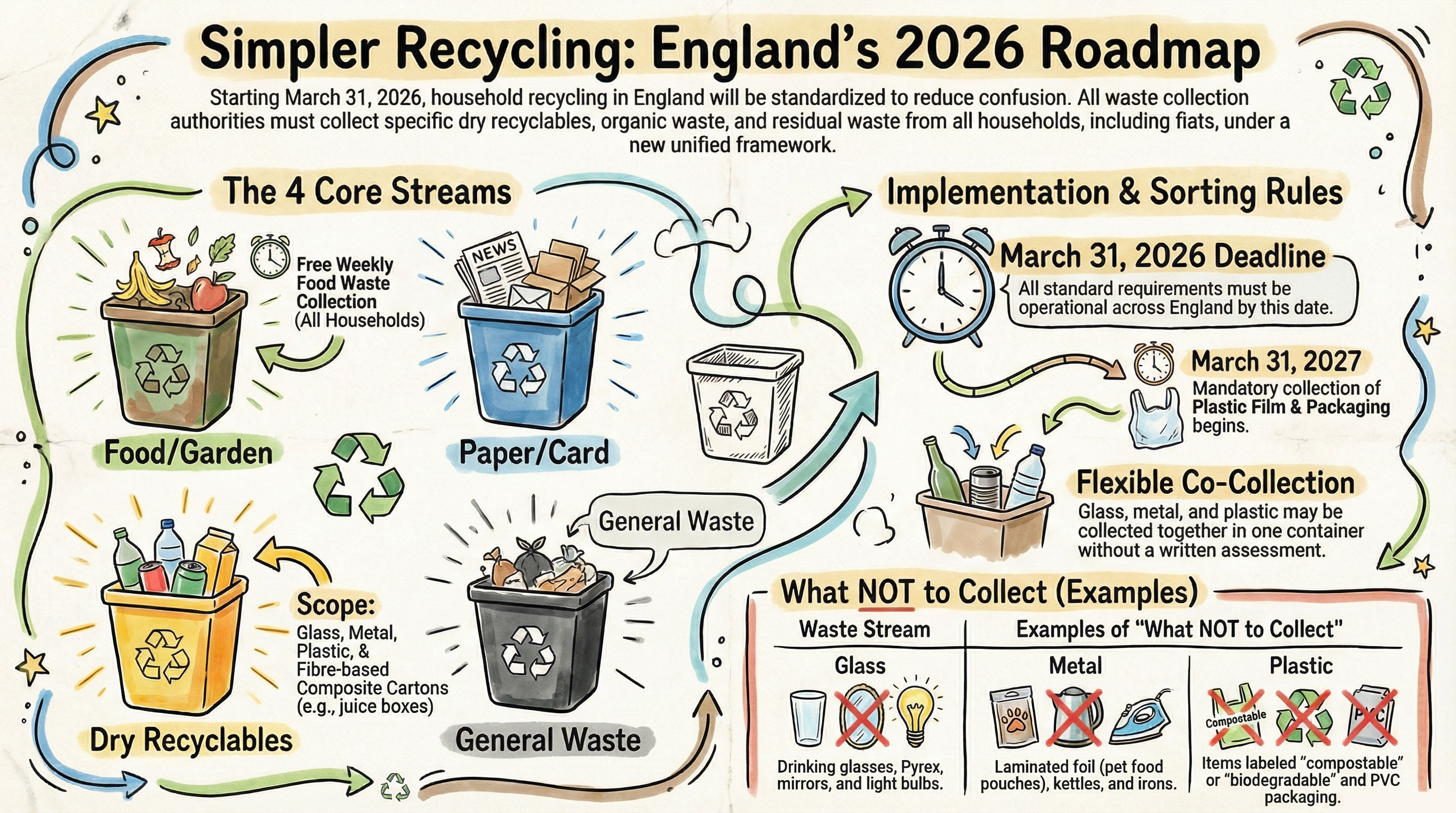
來到英國,不少移英港人都經歷過「掉垃圾的煩惱」。以往搬到不同Council,垃圾桶的顏色和分類規則就完全不同,甚至連同一款塑膠在A區可回收,在B區卻不能,常常令人感到混亂。
為了解決這個亂象,英國政府正式推出「簡化回收」(Simpler Recycling)政策,旨在統一全英格蘭的回收標準。而這項與我們生活息息相關的新規,將於明日(2026年3月31日)明日正式生效,各地將逐步實施!到底有什麼新規定?垃圾應該點樣分?即刻為大家詳細拆解!
👉
點擊前往官網查看詳情
🔥 政策生效及未來時間表提醒:
- 明日生效(2026 年 3 月 31 日): 全英格蘭家庭(包括一般住宅及公寓)全面實行統一回收標準及每週廚餘收集。
- 未來實施(2027 年 3 月 31 日): 塑膠薄膜包裝(Plastic film packaging)及膠袋將被強制納入塑膠類回收,大家可以提早留意!
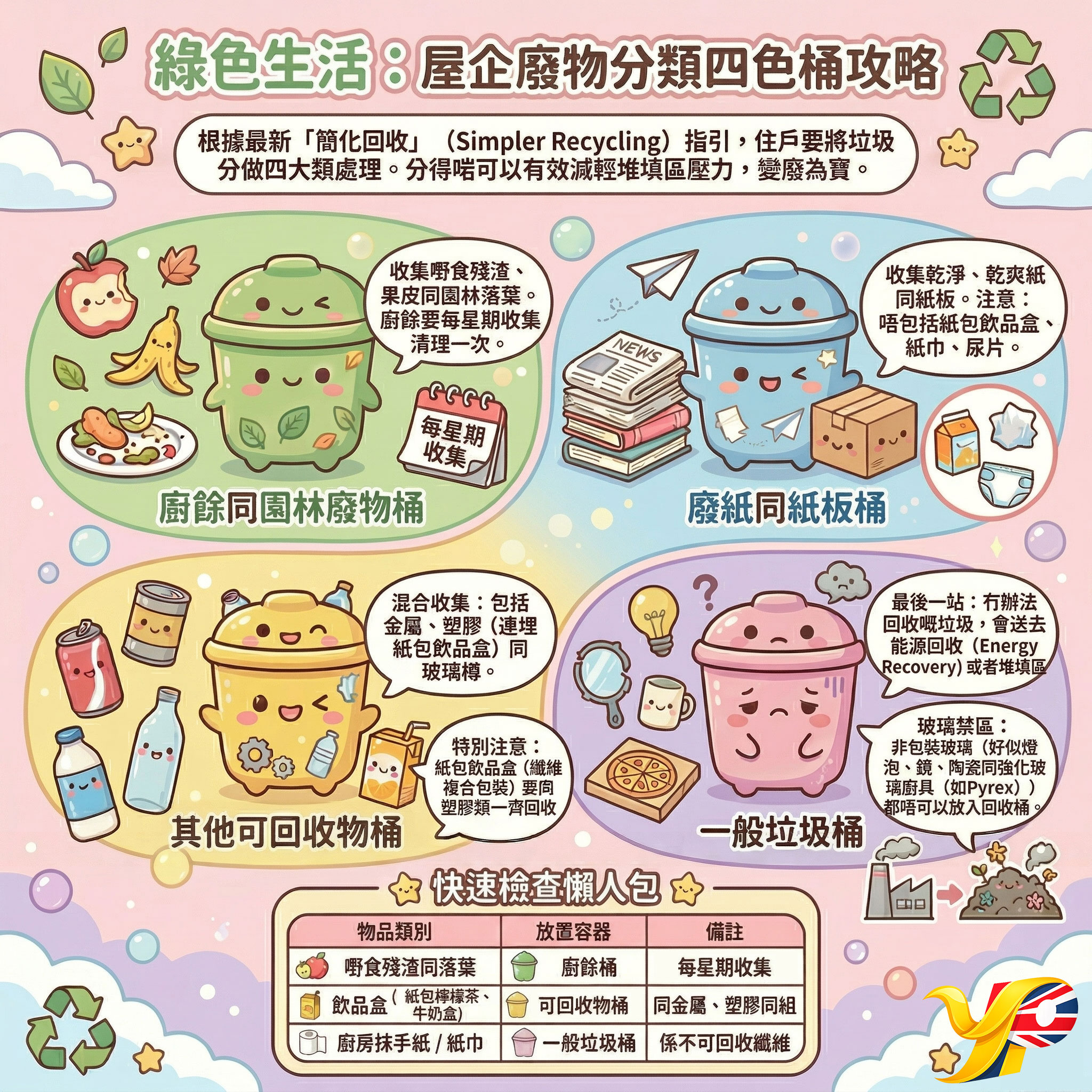
1. 統一的強制回收類別(Household Waste)
明日起,政府要求所有家庭可按四大類別分類,並由 council 提供相關收集,Council 必須提供相應的回收服務:
- 廚餘與園林廢物 (Food and garden waste)
- 紙張與卡紙 (Paper and card)
- 其他乾式可回收物 (Dry recyclables:包含玻璃、金屬、塑膠及包裝紙盒)
- 一般垃圾 (Residual waste:即不可回收並將送往堆填或作能源回收的垃圾)
2. 混合回收更方便!(Dry Recyclables)
以往很多地區要求將玻璃、金屬和塑膠分開三個箱,新規實施後有了統一的彈性處理:
- 金屬、玻璃和塑膠一般可混合收集,但實際安排由各 council 決定: 這三類物品可以放在同一個回收箱內收集,無須硬性分開,大大節省了家中的垃圾分類空間。
- 紙類獨立收集: 原則上,紙張和卡紙應與其他濕度較高的回收物分開收集(除非地方政府因技術或經濟原因宣佈可混合收集)。
- 💡 實用小貼士: 玻璃樽的金屬蓋(如果醬樽蓋)可以不用拆下!直接連著玻璃樽回收即可,這反而有助於機器分揀時保留細小的金屬蓋。
3. 廚餘 (Food Waste) 及 園林廢物 (Garden Waste) 新規定
這是對許多家庭影響最大的改變:
- 免費每週收廚餘: 每個家庭將獲發兩個廚餘桶(一個放在廚房的 caddy 小桶,以及一個室外收集用的大桶),政府要求最終提供每週收集,但實際時間表視乎各 council。所有剩菜、骨頭、果皮、茶包等都可放入。
- 園林廢物多數地區需付費,但由各 council 自行決定(用者自付): 剪草、樹葉、雜草等園林廢物屬於收費服務。只有在居民主動要求並付費訂閱的情況下,當局才會收集。
4. ⚠️ 容易中伏的「不回收」黑名單
政府明確列出了以下不包含在強制回收範圍內的物品,掉垃圾時千萬不要放錯回收箱,否則可能會被貼上「拒絕收集」的警告標籤 (以下為常見回收限制,實際以 council 指引為準):
- ❌ 玻璃類: 水杯、鏡子、窗玻璃、燈泡、Pyrex耐熱玻璃烤盤、花瓶、陶瓷等(這些熔點與包裝玻璃不同,會破壞回收過程)。
- ❌ 金屬類: 錫紙複合包裝(如貓狗濕糧袋、薯片袋)、電器及電池、鍋具餐具、裝過油漆或防凍液的鐵罐。
- ❌ 塑膠類: 標示為「可堆肥」或「可生物降解」的塑膠、發泡膠(Polystyrene)、PVC包裝。
- ❌ 紙張類: 濕紙巾、廁紙、抹手紙、沾滿油污的Pizza盒。
- ❗ 特別注意(紙包飲品盒): 含有纖維素複合材料的飲品紙盒(如紙包檸檬茶、牛奶盒),屬於乾式可回收物,通常與塑膠/金屬一同回收,而非紙類!
總結
這項政策終於結束了英格蘭「各處鄉村各處例」的垃圾分類噩夢。未來大家都能享有免費的每週廚餘收集服務,分類也更清晰。大家記得密切留意所屬 Council 近期派發的最新垃圾收集時間表(Bin Collection Schedule),齊齊做個精明的環保香港人!
如果你覺得這篇文章有用或
工具對您在英生活有幫助,
歡迎請我飲杯咖啡!

Published on March 30, 2026 | Category: UK Life Hacks
England's 2026 "Simpler Recycling" Rules Explained! Ultimate Guide to Food & Waste Sorting
After moving to the UK, many Hong Kongers have experienced the "rubbish sorting headache". In the past, moving to a different Council meant entirely different bin colours and recycling rules. A specific plastic item might be recyclable in Area A, but rejected in Area B, causing endless confusion.
To resolve this chaos, the UK government has officially introduced the "Simpler Recycling" policy, aimed at unifying recycling standards across England. These new rules, which directly affect our daily lives, will officially take effect tomorrow (March 31, 2026) and will be gradually implemented across different areas! What are the exact changes? How should we sort our bins now? Let's break it down in detail!
👉
Click here to check the guidance on the official website
🔥 Policy Effective Alert & Future Timeline:
- Effective Tomorrow (March 31, 2026): All households in England (including standard homes and flats) will implement unified recycling standards and weekly food waste collections.
- Future Implementation (March 31, 2027): Plastic film packaging and plastic bags will be mandatorily included in plastic recycling, so keep an eye out for that early!
1. Unified Mandatory Recycling Categories (Household Waste)
From tomorrow, the government requires all households to sort waste into four main categories, with collections provided by the council. Councils must provide the corresponding recycling services:
- Food and garden waste
- Paper and card
- Other dry recyclables (including glass, metal, plastic, and packaging cartons)
- Residual waste (non-recyclable waste sent to landfill or for energy recovery)
2. Mixed Recycling is Easier! (Dry Recyclables)
Previously, many areas required separating glass, metal, and plastic into three different boxes. The new rules introduce a unified and flexible approach:
- Metal, glass, and plastic can generally be collected together, but the actual arrangement is decided by each council: These three categories of items can be collected in the same recycling bin without strict separation, saving a lot of sorting space at home.
- Paper Collected Separately: In principle, paper and card should be collected separately from other (potentially wetter) recyclables (unless local authorities declare mixed collection due to technical or economic reasons).
- 💡 Practical Tip: Metal lids on glass jars (like jam jar lids) do not need to be removed! You can recycle them directly attached to the glass jar. This actually helps the sorting machines retain the small metal lids.
3. New Rules for Food Waste and Garden Waste
This will be the most significant change for many households:
- Free Weekly Food Waste Collection: Every household will be provided with two food waste bins (a small kitchen caddy and a larger outdoor collection bin). The government requires eventual weekly collection, but the actual schedule depends on each council. All leftovers, bones, fruit peels, and tea bags can go in.
- Garden waste is chargeable in most areas, but is decided by each council (user-pays): Garden waste such as grass clippings, leaves, and weeds is a paid service. The authorities will only collect it if residents actively request and pay for the subscription.
4. ⚠️ Common "Non-Recyclable" Traps to Avoid
The government has explicitly listed the following items that are not included in the mandatory recycling scope. Make sure not to put them in the wrong bin, otherwise, your bin might get a "refused collection" warning tag (the following are common recycling restrictions; actual rules are subject to council guidelines):
- ❌ Glass: Drinking glasses, mirrors, window glass, light bulbs, Pyrex roasting dishes, vases, ceramics (these have a different melting point than packaging glass and will ruin the recycling process).
- ❌ Metal: Foil composite packaging (like pet food pouches, crisp packets), electrical items and batteries, pots and cutlery, tins that contained paint or antifreeze.
- ❌ Plastic: Plastics labelled as "compostable" or "biodegradable", polystyrene, PVC packaging.
- ❌ Paper: Wet wipes, toilet paper, paper towels, heavily grease-stained pizza boxes.
- ❗ Special Note (Drink Cartons): Food and drink cartons containing composite cellulose materials (like lemon tea boxes, milk cartons) are considered dry recyclables and are usually recycled together with plastic/metal, not paper!
Conclusion
This policy finally puts an end to the postcode lottery nightmare of rubbish sorting in England. In the future, everyone will enjoy free weekly food waste collection, and the sorting rules will be much clearer. Remember to keep an eye out for the latest Bin Collection Schedule sent by your local Council, and let's all be smart, eco-friendly Hong Kongers in the UK!
If you find this real-life experience useful or
if the tools help your life in the UK,
feel free to buy the editor a coffee! ☕